Deploying a PHP Application on Azure vs Nimbuz

Deploying a PHP application means hosting and managing your application on a cloud platform so it can run reliably, scale efficiently, and remain accessible to users. Modern deployment platforms help streamline application delivery, improve performance, and simplify operational management.
Nimbuz provides a modern Platform as a Service (PaaS) experience that simplifies PHP application deployment through automated infrastructure management, built in scaling, simplified deployment workflows, and developer friendly tools. This enables teams to focus more on building applications instead of managing servers and operational overhead.
Unlike Azure Virtual Machine deployment approaches that require manual server setup, runtime configuration, networking management, and scaling operations, Nimbuz automates the deployment lifecycle and delivers a faster and more developer friendly experience.
Why Choose Nimbuz for PHP Deployment
Nimbuz is designed to remove infrastructure complexity and simplify cloud deployments for developers and teams.
Key benefits include:
- Simplified Deployment Workflow
- Built in HTTPS
- Integrated deployment workflows
- Easy scaling and monitoring
- Git based deployments
- Simple environment variable management
- Reduced DevOps Overhead
- Faster Time to Production
This allows developers to focus more on building applications instead of managing infrastructure.
Deploy a PHP Application on Azure Virtual Machine
Azure Virtual Machines provide full control over your infrastructure. However, this also means you are responsible for configuring the environment, installing required software, and maintaining the server.
Step 1: Create an Azure Virtual Machine
- Go to Azure Portal
- Click Create Resource → Virtual Machine
- Configure:OS: Ubuntu (recommended)Size: Basic (for testing)Authentication: SSH / Password
- Click Create
Step 2: Connect to the Virtual Machine
ssh username@your-vm-ipStep 3: Install PHP and Required Packages
Update system:
sudo apt update && sudo apt upgrade -yInstall Apache and PHP:
sudo apt install apache2 php libapache2-mod-php php-mysql -yStep 4: Upload Your PHP Application
Using Git:
git clone https://github.com/your-repo.git
cd your-project
Or manually upload files using SCP/FTP.
Step 5: Configure Apache
Move your project files:
sudo cp -r * /var/www/html/
Set permissions:
sudo chown -R www-data:www-data /var/www/html
Restart Apache:
sudo systemctl restart apache2Step 6: Configure Database (Optional)
Install MySQL:
sudo apt install mysql-server -y
Secure installation:
sudo mysql_secure_installationCreate database and user for your application.
Step 7: Open Port in Azure
- Go to VM → Networking
- Add inbound rule:Port: 80Protocol: TCPAction: Allow
Access your app:
http://your-vm-ipStep 8: Enable HTTPS (Optional)
sudo apt install certbot python3-certbot-apache
sudo certbot --apache
Deploy a PHP Application on Nimbuz
Nimbuz is a PaaS platform designed to simplify application deployment by removing infrastructure complexity. It automates runtime setup, networking and scaling so developers can focus purely on code.
Here's a simple, step by step guide to get your app running on Nimbuz:
Nimbuz supports various databases such as MySQL, PostgreSQL, MongoDB, Mssql, n8n and Rabbitmq
If you are using a database, refer to this CloudBeaver blog to learn how to set it up and use it.
Step 1: Go to Applications
- Log in or sign up on Nimbuz platform .
- Navigate to the Applications section.
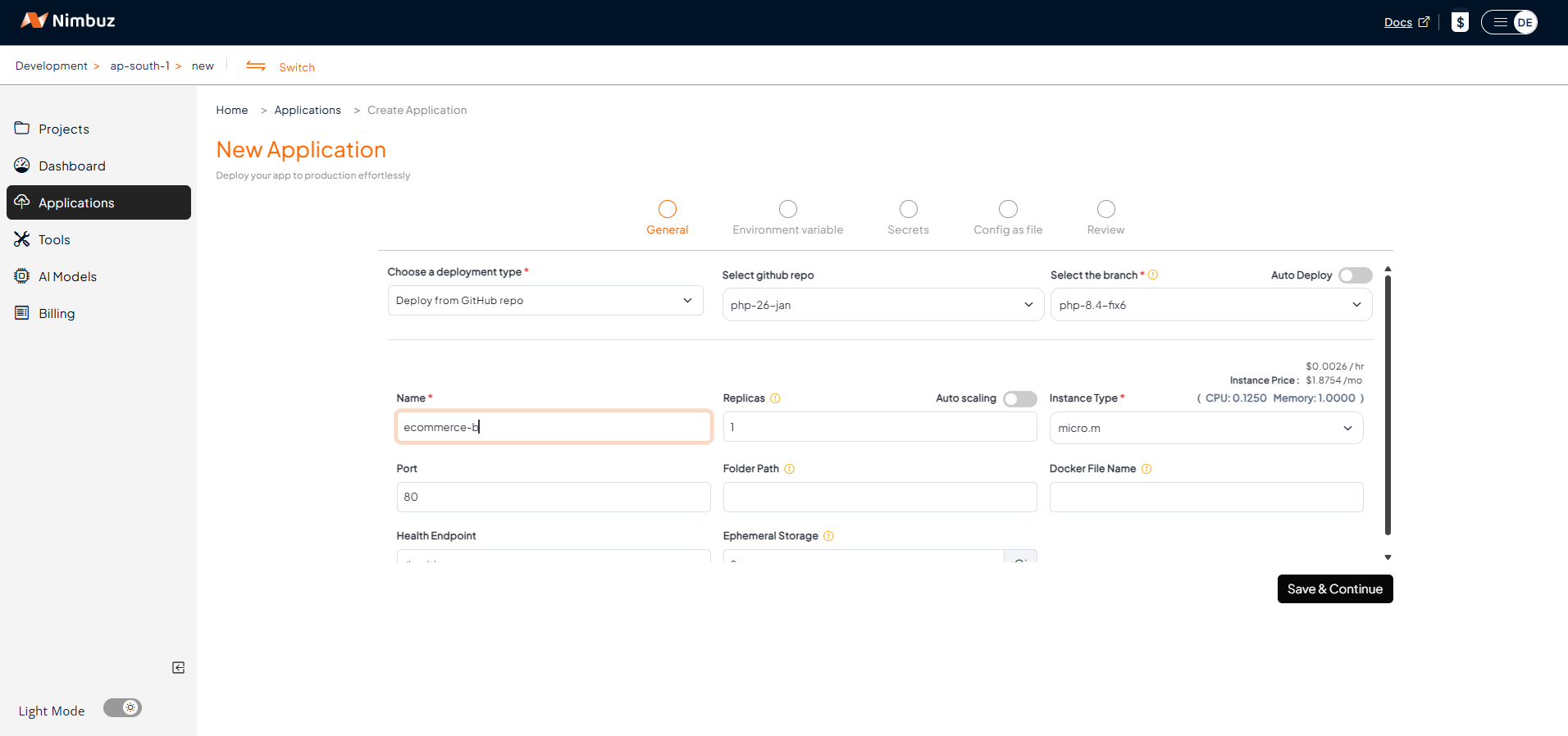
- Choose your deployment type:
- Connect your code repository: GitHub or GitLab → Connect account → Pick repo and branch. [OR]
- Upload your code via zip or tar file: Just upload your code.
- Configure the app port and instance type.
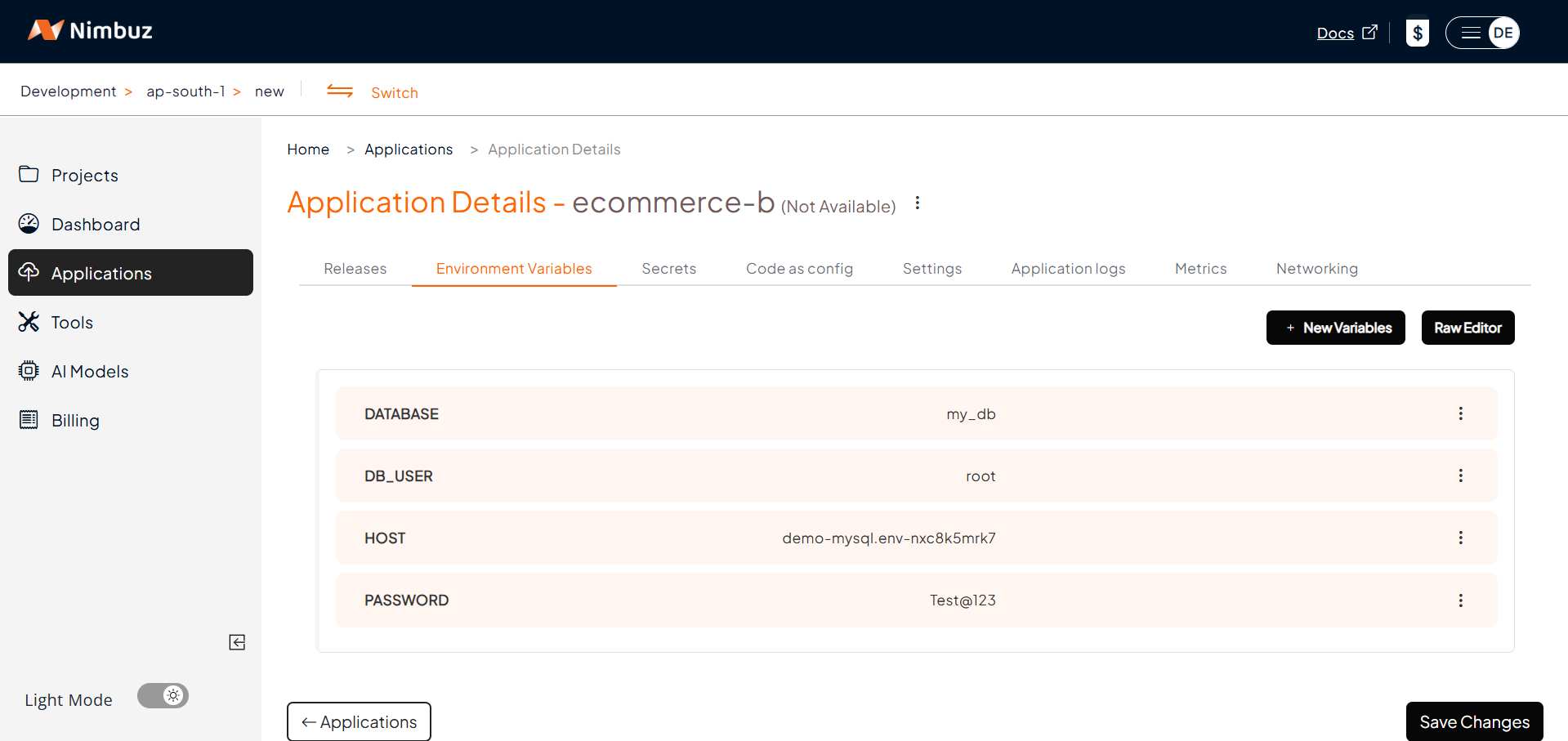
- Set Environment Variables in the Raw Editor
Step 2: Review & Deploy
- Review your deployment details.
- Click Submit to deploy your application and make it live instantly.
Step 3: Track Your Application
Once your application is successfully deployed, you can monitor and manage it from the dashboard. Nimbuz provides detailed insights across different sections.
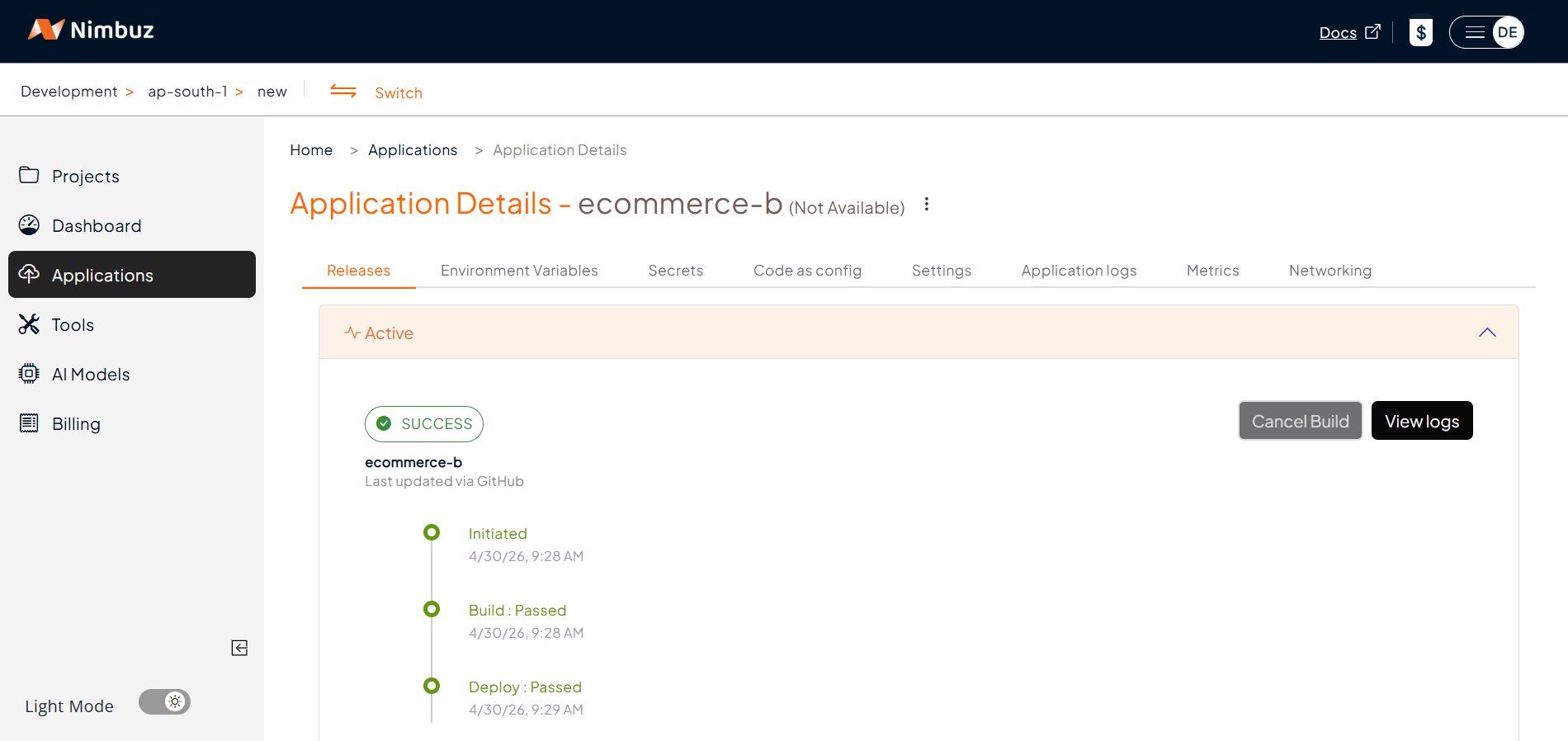
View deployment status, logs, and recent releases directly in the UI.
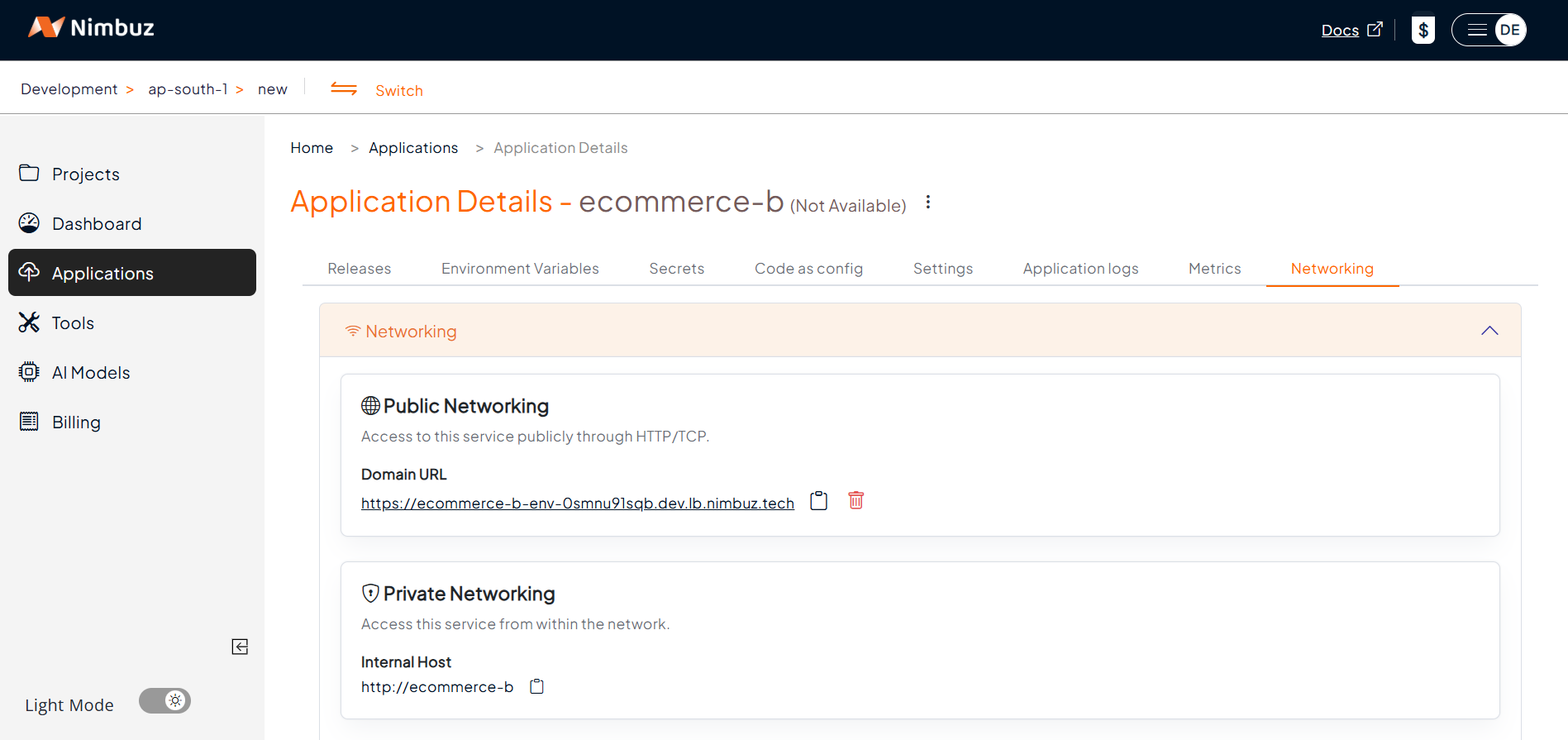
Step 4: Application URL & Access
- Go to the Networking tab → Click Generate Domain.
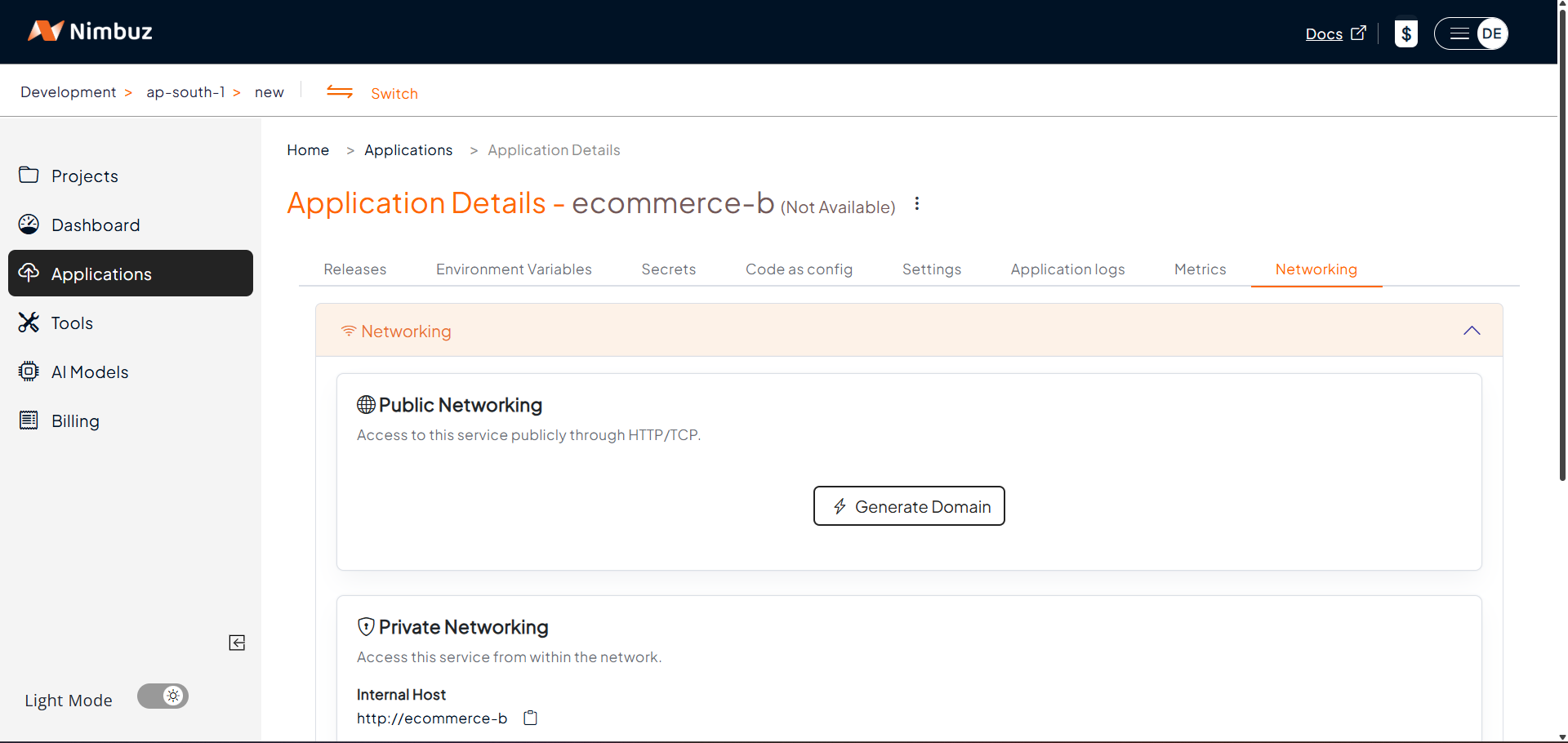
- After clicking Generate Domain, the system generates a public endpoint.
- Your app is automatically served with HTTPS.
- Optionally, map a custom domain.
This allows the application to go live quickly.
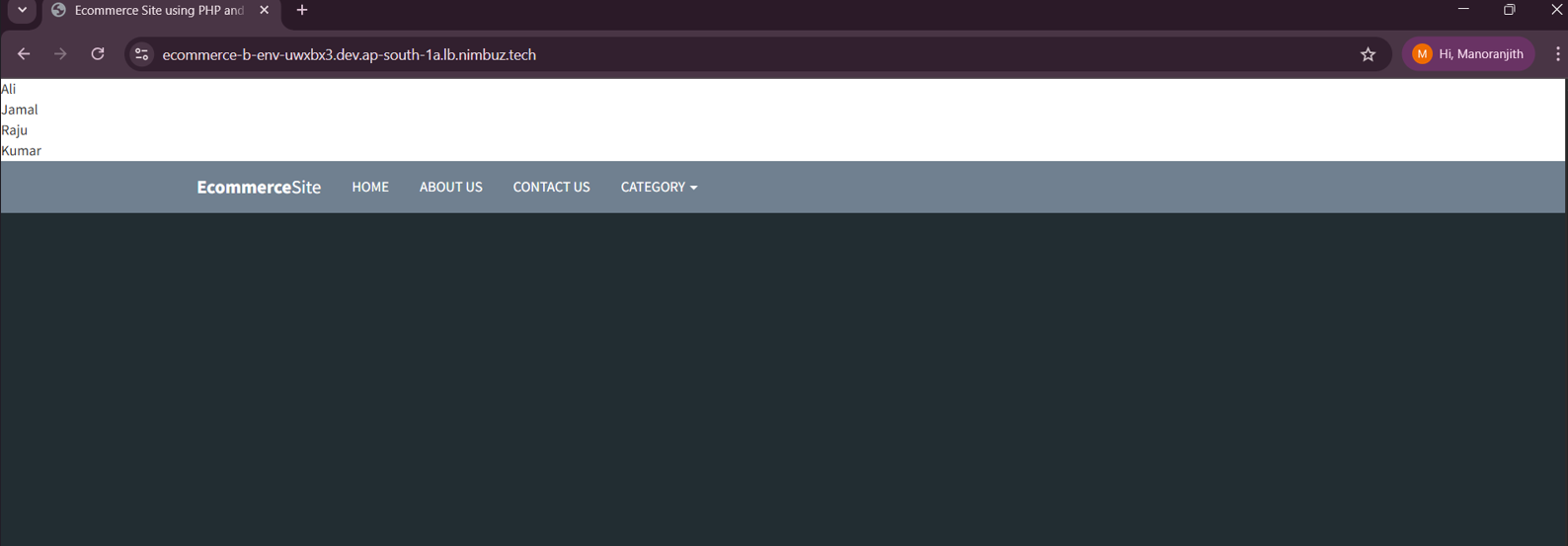
Hosting & Endpoint Setup Compared: Azure vs Nimbuz
When deploying a Angular application, both Azure Virtual Machines and Nimbuz Platform can host your application, but the setup process is different.
Azure Virtual Machine:
Manual setup required:
- Create VM
- Install dependencies
- Configure server
- Set up SSL
Result: Flexible but time consuming setup.
In short: Azure provides full control but requires manual configuration.
Nimbuz Platform:
Fully automated:
- Instant domain generation
- Built in HTTPS
- No server setup
Result: Instant hosting with minimal effort.
In short: Nimbuz offers a simple and automated deployment experience for developers with zero DevOps support.
Azure vs Nimbuz: Key Differences
| Feature | Azure VM | Nimbuz Platform (PaaS) |
|---|---|---|
| Deployment | Manual setup via SSH | One click deployment |
| Setup Time | 30 to 40 minutes | 2 to 3 minutes |
| Server Setup | Manual installation | Automatic runtime setup |
| SSL | Manual configuration | Built in HTTPS |
| Monitoring | External tools required | Built in log viewer |
| Scaling | Manual configuration | Platform managed |
| Ease of Use | Requires cloud knowledge | Beginner friendly |
| Cost | Pay separately for EC2 instance, storage, and SSL. Very high cost with fixed package. | Pay only for the Nimbuz plan - all infrastructure included. Low cost, 60% cheaper than AWS. |
| Access URL | http://IP or custom domain |
http://<app-name>.nimbuz.tech or custom domain |
Conclusion
Both Azure and Nimbuz are capable platforms for deploying PHP applications, but they serve different types of users and requirements.
- Azure Virtual Machine → Ideal for developers who need full control over server configuration and infrastructure
- Nimbuz Platform (PaaS) → Best suited for developers looking for quick, automated, and hassle free deployment